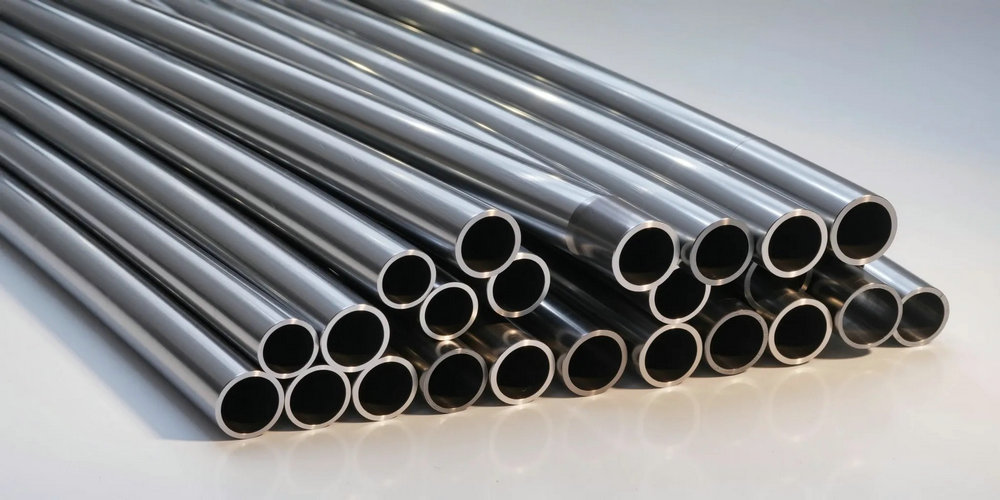
T22 high pressure alloy steel pipe is a critical material widely used in high-temperature and high-pressure environments such as power generation and petrochemical industries. Known for its excellent heat resistance and creep strength, T22 has become a standard solution for pressure-bearing components in demanding operating conditions.
This article provides a comprehensive overview of T22 alloy steel pipe, covering material characteristics, production processes, application fields, market trends, and procurement considerations.
T22 high pressure alloy steel pipe belongs to low-alloy chromium-molybdenum (Cr-Mo) steel. Its typical chemical composition includes:
Chromium (Cr): 1.0–1.5%
Molybdenum (Mo): 0.44–0.65%
The addition of chromium and molybdenum significantly enhances high-temperature strength, oxidation resistance, and creep resistance.
According to laboratory testing data, T22 steel pipe maintains excellent mechanical performance at 540°C:
Yield strength ≥ 205 MPa
Tensile strength ≥ 415 MPa
Elongation ≥ 30%
T22 pipes comply with international standards such as:
ASME SA213
ASTM A335
These standards make T22 particularly suitable for boiler superheaters, reheaters, and other pressure-bearing components.
Modern T22 steel pipes are mainly produced through hot rolling or cold drawing processes. High-quality products typically follow these critical manufacturing steps:
Alloy Smelting
Electric arc furnace (EAF) combined with LF refining ensures strict impurity control.
Hot Piercing & Rolling
Performed at approximately 1200°C to form seamless pipe billets.
Cold Drawing & Finishing
Multiple-pass cold drawing ensures high dimensional accuracy (outer diameter tolerance ±0.2 mm).
Heat Treatment
Normalizing + tempering treatment achieves grain size grade 7 or above.
Non-Destructive Testing (NDT)
100% ultrasonic testing and eddy current inspection ensure structural integrity.
Microstructural analysis under scanning electron microscopy (SEM) shows that high-quality T22 pipes exhibit a uniform tempered sorbite structure, which is critical for long-term service reliability.
T22 is widely used in supercritical and ultra-supercritical boiler superheater tubes, operating at temperatures up to 580°C.
In a power plant retrofit case, replacing carbon steel pipes with T22 extended the maintenance cycle from 8,000 hours to 24,000 hours, significantly reducing downtime and operational costs.
T22 is used in:
Catalytic cracking units
Hydroprocessing reactors
It demonstrates superior hydrogen sulfide (H₂S) corrosion resistance compared to conventional steels. In sulfur-containing oil and gas environments, T22 pipe service life can be up to three times longer than 304 stainless steel.
Although not used in nuclear island primary equipment, T22 is applied in secondary loop feedwater systems. Nuclear-grade T22 requires stricter phosphorus and sulfur control (≤0.012%).
Standard Chinese specification (Φ38×5mm): approx. 1200–1700 USD/ton
International premium brands (e.g., Sumitomo Corporation): 40–60% price premium
Special specifications (thin-wall or thick-wall): price fluctuation ±30%
Qualification Verification
Require Material Test Certificate (MTC) and third-party inspection certificates (e.g., SGS).
Process Evaluation
Prefer manufacturers using combined “hot rolling + cold drawing” processes.
Surface Quality Control
Internal surface roughness Ra ≤ 3.2 μm to avoid stress concentration.
Inventory Planning
Considering a 6–8 week production cycle, major projects should plan procurement in advance.
Welding Process
Preheating: 150–200°C
Post-weld heat treatment (PWHT): 680–720°C
Corrosion Protection
Add corrosion inhibitors in chloride-containing environments.
Service Life Evaluation
Regular hardness testing (HB ≤ 163) and wall thickness measurement are recommended.
Failure Case Example
A chemical plant experienced weld cracking after 4,000 service hours due to failure to perform proper post-weld heat treatment.
Material Upgrades
Microalloyed T22 with Nb and V additions is under development, potentially increasing allowable service temperature to 600°C.
Smart Manufacturing
IoT-based pipe life prediction systems are being piloted.
Green Production
Mechanical descaling is gradually replacing acid pickling to reduce environmental impact.
With the expansion of ultra-supercritical power generation technology, global demand for T22 high pressure alloy steel pipe is expected to grow at an annual rate of 6–8%.
When selecting T22 materials, buyers should evaluate not only initial cost but also total lifecycle cost, prioritizing suppliers with complete quality assurance systems and relevant special equipment manufacturing licenses.