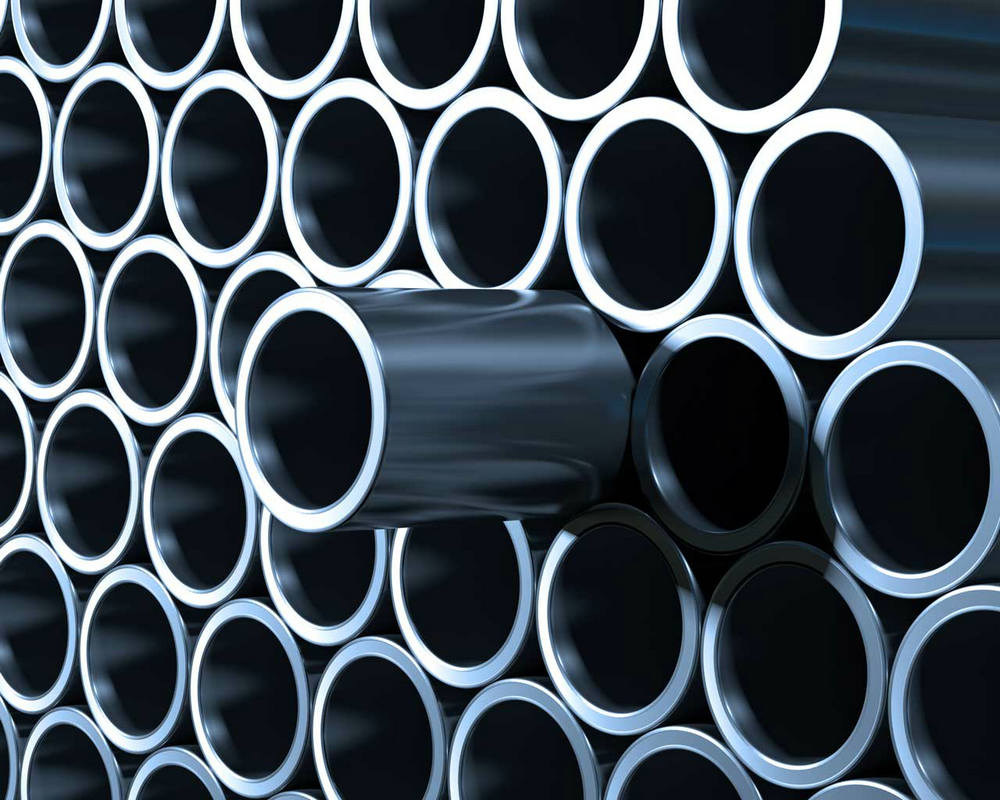
In industrial production, corrosion causes trillions of dollars in economic losses worldwide every year. To address this challenge, China-developed ND Steel (09CrCuSb) seamless pipe has become a reliable "anti-corrosion guardian" in highly corrosive environments such as power generation and chemical processing industries, thanks to its excellent corrosion resistance and outstanding mechanical properties. This technological breakthrough not only reduces dependence on imported materials, but also establishes a new standard for corrosion protection with superior cost performance and reliable service life.
The exceptional corrosion resistance of ND Steel comes from its unique alloy design concept. By precisely controlling the composition of key alloying elements such as copper (0.20%–0.45%) and antimony (0.04%–0.12%), engineers create a dense Cr-Cu-Sb composite oxide film on the metal surface, only a few microns thick but highly protective.
This protective layer remains remarkably stable even in highly acidic environments with a pH value of 2–3. Its corrosion resistance mechanism is mainly reflected in three aspects:
Copper promotes rapid repair of the passive film
Antimony improves film compactness
Chromium provides basic corrosion resistance capability
Accelerated laboratory corrosion tests show that ND Steel has an annual corrosion rate of only 0.3–0.5 mm/year in simulated flue gas condensate environments, far lower than ordinary carbon steel at 2–3 mm/year.
Even under working conditions involving solid particle erosion, the oxide film on the ND Steel surface can still maintain more than 90% integrity. Meanwhile, the material retains excellent mechanical performance:
Tensile strength: 440–550 MPa
Yield strength: 295–380 MPa
Elongation: 22%–28%
These properties fully comply with the GB/T5310 standard for high-pressure boiler tubes.
Transforming laboratory formulas into industrial products requires overcoming multiple manufacturing challenges. Leading manufacturers adopt a "three-step" refining process:
LF furnace deep desulfurization, reducing sulfur content below 0.005%
VD vacuum degassing, lowering hydrogen content below 1.5 ppm
Calcium treatment, improving steel cleanliness
This strict metallurgical control ensures non-metallic inclusion levels reach DS ≤ 1.0, laying a solid foundation for subsequent processing.
For forming technology, advanced three-roll continuous rolling technology is used. By accurately controlling deformation per pass (15%–25%), wall thickness tolerance is maintained within ±5%.
The heat treatment process adopts an innovative "Normalizing (900–930°C) + Tempering (630–680°C)" dual-process system. Computer-simulated temperature optimization ensures uniform microstructure throughout the pipe body, ultimately achieving the ideal metallographic structure of ferrite + 5%–10% pearlite, with hardness stabilized between 160–175 HB.
This precise control gives ND Steel pipes:
Excellent cold bending performance (bending radius ≥ 3D)
Good weldability (carbon equivalent Ceq ≤ 0.42%)
In practical applications within the power industry, comparative testing by a major power generation group demonstrated that air preheater cold-end modules manufactured with ND Steel pipes achieved a service life extension from 28 months to 105 months under the same coal quality conditions.
More importantly, heat exchange efficiency retention improved significantly. The annual efficiency decline rate decreased from 8% with conventional materials to only 2%.
For a single 1000 MW power unit, this translates into approximately 12 million kWh less power generation loss annually, generating economic benefits exceeding RMB 4 million per year.
Applications in the petrochemical sector are equally impressive.
In a refinery atmospheric and vacuum distillation unit, ND Steel pipes operated continuously for 62 months in an extreme environment containing:
8% H₂S
4% SO₂
Trace organic acids
Ultrasonic thickness measurements showed an average corrosion rate of only 0.08 mm/year.
Compared with imported materials that required partial replacement every 18 months, ND Steel extended maintenance intervals to more than 5 years, saving over RMB 2 million annually per processing unit.
Environmental engineering applications further demonstrate the comprehensive advantages of ND Steel.
A waste incineration project processing 800 tons per day utilized ND Steel pipes in the low-temperature section of a waste heat boiler. Under harsh conditions with:
HCl concentration: 500–800 mg/m³
Temperature: 120–180°C
the system achieved 8 years of leak-free operation.
Due to its excellent thermal conductivity (46 W/m·K), the boiler's overall thermal efficiency improved by 1.2 percentage points, generating approximately RMB 1.5 million in additional annual electricity revenue.
Driven by China's dual carbon strategy, demand for ND Steel seamless pipes is growing rapidly.
Ultra-low emission retrofit projects in the power industry are expected to generate annual demand of 250,000 tons
Chemical equipment upgrades may create an additional market demand of 150,000 tons annually
Major domestic manufacturers have already established a combined annual production capacity of 800,000 tons.
Among them:
Baosteel operates wide hot-strip rolling lines capable of producing full wall thickness ranges from 6–40 mm
ARK STEEL TUBE specializes in small-diameter precision tubes (φ10–φ89 mm)
Future technology development is mainly focusing on three directions:
Nano-composite anti-corrosion coatings using vapor deposition technology to form Al₂O₃-TiO₂ nano-films inside pipes, targeting a 30% improvement in acid resistance
Intelligent welding technologies using laser vision-guided narrow-gap automatic welding to achieve weld corrosion resistance above 95% of the base material
Full lifecycle management systems with embedded sensors for real-time corrosion monitoring and predictive maintenance
These innovations will help ND Steel pipes evolve from high-performance materials into intelligent anti-corrosion solutions, providing stronger support for high-quality industrial manufacturing development.