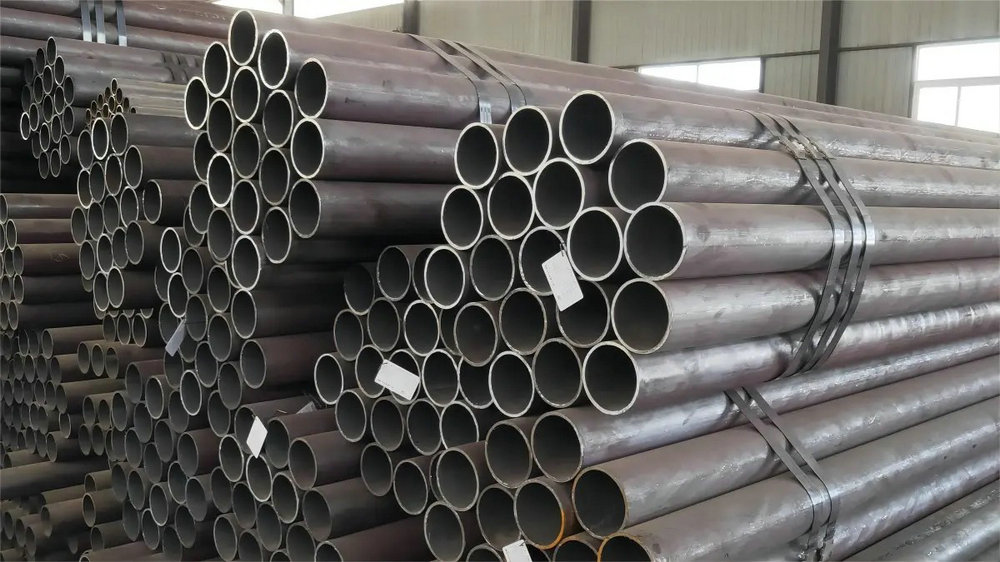
In modern industrial systems, material selection plays a critical role in determining equipment reliability, operating efficiency, and service life. Among various pressure tubing materials, ASTM A192 cold drawn seamless steel tubes have earned a strong reputation for their excellent performance under high-temperature and high-pressure conditions.
Widely used in power generation, petrochemical processing, boilers, heat exchangers, and pressure vessel systems, ASTM A192 tubing offers a balanced combination of strength, dimensional accuracy, durability, and cost-effectiveness. This article explores the material properties, manufacturing process, key applications, purchasing considerations, and maintenance recommendations for ASTM A192 seamless steel tubes.
ASTM A192 is a specification covering minimum-wall-thickness seamless carbon steel boiler and superheater tubes designed for high-pressure service. The material is produced through a seamless manufacturing process followed by cold drawing, resulting in superior dimensional precision and enhanced mechanical properties.
Compared with conventional hot-finished tubes, cold drawn ASTM A192 tubes provide:
Improved dimensional accuracy
Better surface finish
Higher tensile strength
Enhanced pressure resistance
Excellent reliability in critical applications
These characteristics make ASTM A192 one of the preferred carbon steel tubing materials for demanding industrial environments.
The excellent performance of ASTM A192 tubes begins with carefully controlled chemical composition.
Carbon (C): 0.06%–0.18%
Manganese (Mn): 0.27%–0.63%
Sulfur (S): ≤ 0.045%
Phosphorus (P): ≤ 0.045%
The controlled carbon content provides an optimal balance between strength and ductility. Manganese improves hardenability and mechanical strength, while low sulfur and phosphorus levels help reduce the risk of brittleness and intergranular corrosion.
Through the cold drawing process, ASTM A192 tubes develop a refined grain structure that significantly enhances mechanical properties.
Typical values include:
| Property | Value |
| Tensile Strength | ≥ 380 MPa |
| Yield Strength | ≥ 205 MPa |
| Elongation | Approximately 30% |
One of the most valuable characteristics of ASTM A192 tubing is its ability to retain mechanical strength at elevated temperatures. Even under continuous high-temperature operation, the material maintains a high percentage of its room-temperature strength, ensuring long-term structural stability.
The cold drawing process is a key factor that differentiates ASTM A192 tubing from standard seamless steel tubes.
Cold drawing enables tighter manufacturing tolerances:
Diameter ≤ 25.4 mm: tolerance within ±0.79 mm
Diameter > 114.3 mm: tolerance within ±1%
This high level of precision simplifies installation and improves compatibility with critical pressure systems.
The process produces smoother internal and external surfaces, reducing flow resistance and improving heat-transfer efficiency in thermal applications.
Cold working refines the steel microstructure, increasing strength while maintaining adequate ductility for fabrication and service.
ASTM A192 tubes are subjected to comprehensive quality control procedures before delivery.
Eddy current testing detects surface defects and discontinuities, helping identify flaws larger than approximately 0.5 mm.
Ultrasonic inspection evaluates internal integrity and can detect abnormal wall-thickness variations and hidden defects.
Each tube undergoes hydrostatic testing, typically at pressures significantly higher than normal operating conditions, ensuring safe performance in service.
These rigorous testing procedures help guarantee consistent quality and reliability in critical applications.
ASTM A192 tubing is widely used in:
Water wall tubes
Boiler tubes
Superheaters
Economizers
Operating temperatures typically range from 300°C to 550°C, while system pressures can reach 20 MPa or higher. The material’s strength and creep resistance make it suitable for long-term service under these demanding conditions.
The smooth internal surface of cold drawn tubes reduces fluid resistance and improves heat-transfer efficiency, making ASTM A192 a popular choice for industrial heat exchangers.
Although ASTM A192 is a carbon steel material, its controlled chemical composition and low impurity content provide reliable performance in many petrochemical environments.
Applications include:
Process heaters
Refinery equipment
Heat recovery systems
Pressure piping systems
Power plants, chemical facilities, and industrial manufacturing operations rely on ASTM A192 tubing for safe and efficient transportation of high-temperature fluids and steam.
When sourcing ASTM A192 seamless tubes, buyers should consider several important factors.
Choose manufacturers that possess:
ASME certification
ISO 9001 quality management certification
Pressure equipment manufacturing qualifications
Complete material traceability systems
Always request:
Mill test certificates (MTC)
Chemical composition reports
Mechanical property reports
Inspection and testing records
These documents verify compliance with ASTM standards and project specifications.
Custom sizes, oversized diameters, or extra-long lengths may require special production arrangements and longer lead times. Confirm manufacturing capabilities before placing orders.
Proper installation and maintenance are essential for maximizing service life.
Avoid excessive mechanical force during assembly.
Prevent unnecessary residual stresses.
Ensure proper alignment of piping systems.
Follow recommended welding procedures.
For long-term operation, wall-thickness inspections should be conducted regularly, especially at:
Elbows
Tees
Welded joints
High-stress areas
Early detection of wear or corrosion can significantly reduce maintenance costs and prevent unexpected failures.
For corrosive media, consider:
Internal protective coatings
Corrosion inhibitors
Upgraded alloy steel alternatives when necessary
In particularly severe environments, alloy steel grades such as ASTM A213 may provide enhanced corrosion and temperature resistance.
ASTM A192 cold drawn seamless steel tubes have become a trusted solution for high-temperature and high-pressure applications due to their excellent mechanical properties, dimensional accuracy, reliability, and cost-effectiveness. From power generation boilers to petrochemical heat exchangers, these tubes continue to play a vital role in modern industrial infrastructure.
By understanding their material characteristics, manufacturing quality requirements, and application limitations, engineers and procurement professionals can select the most suitable tubing solution for long-term operational success.